
On Counterfeit Thinking
My father had a word for thought that feels productive but isn't. He called it counterfeit.
Counterfeit thinking looks right. It has the shape of reasoning. It arrives with a kind of confidence. But has been arranged to arrive at a conclusion you wanted, or to avoid a conclusion you didn't. It is thinking in the service of comfort rather than truth. He was suspicious of it the way a jeweler is suspicious of a stone that is almost the right color.
Almost is not the color.
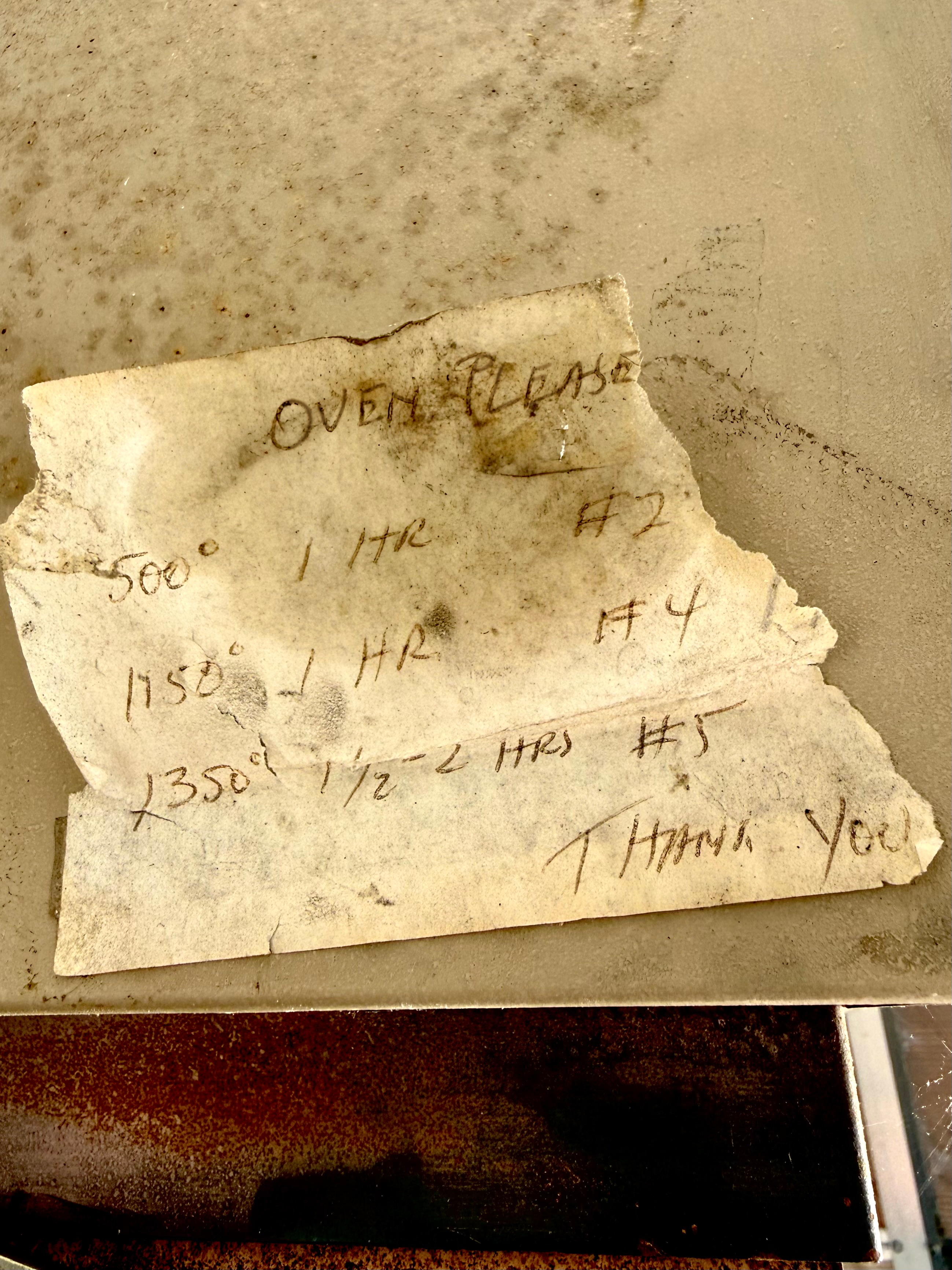
On an index card under a jar of flux, he wrote: The honest thought often arrives as a small defeat. Welcome it anyway. It knows something you don't yet.
That note has lived on this bench for years.
A version of this applies to making things. The moment when you know a piece isn't working — it's not broken, not unsalvageable, but not right. When you realize you're working too hard to make it work, you face a choice between the honest thought (start again) and the counterfeit one (it's close enough). Don't live in the second space, if you don't love it no one else should.
The honest thought about a friendship, a choice, or a direction, is often the one that requires a bit of acceptance.
Be hospitable to it. Offer it a chair. Understand what it came to say.